Abhijnan Nath
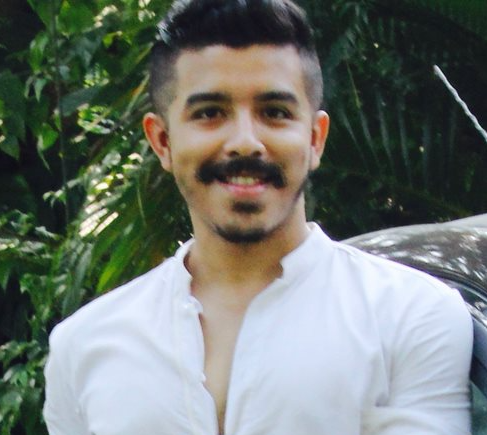
Machine Learning and AI Alignment Researcher
Welcome!
I recently completed my PhD in Computer Science (AI/ML) at Colorado State University, advised by Dr. Nikhil Krishnaswamy at the SIGNAL Lab. I am currently an Applied ML Research Scientist at Adobe on the Brand Intelligence team. My PhD research, supported by DARPA, NSF, the U.S. Army Research Office, and ARPA-H, has appeared at NeurIPS, ACL, EMNLP, NAACL, and AAMAS. My PhD dissertation work on friction-aware alignment was highlighted in the Microsoft New Future of Work Report 2025 as a key direction for collaborative AI systems.
My Research
My research focuses on reinforcement learning for aligning language models to social intelligence and human preferences in multi-turn, multi-agent settings. I work across three themes: causal generalization — how agents transfer values to unseen situations and evaluate each other interactionally (Collaborate, Deliberate, Evaluate: How LLM Alignment Affects Coordinated Multi-Agent Outcomes, AAMAS 2026); principled credit assignment — learning objectives that attribute outcomes to the mechanisms that caused them, from token-level coalitional credit for search and recommendation (OSPO, preprint) to turn-level epistemic credit for multi-turn information-seeking agents (Epistemic Decision Processes) and counterfactual regularization for partner-aware agents (ICR, NeurIPS 2025); and grounded collaboration — turning dialogue signals into supervision for adapting to evolving preferences (FAAF, ACL 2025), with CRAFT as a grounded multi-agent coordination benchmark for evaluating pragmatic communication under partial information. As part of the NSF iSAT program, I led the initial training and evaluation of collaborative AI agents with the goal of delivering real-time learning support in K-12 classrooms across the US. I also led AxomiyaBERTa, the first monolingual Assamese transformer model for low-resource language processing.
News and Events
- May’ 26: Joined Adobe as Applied ML Research Scientist on the Brand Intelligence team.
- May’ 26: PhD conferred, Department of Computer Science, Colorado State University. Dissertation.
- Feb’ 26: Successfully defended PhD dissertation
- Dec’ 25: Had an incredible experience presenting at NeurIPS 2025 and meeting with the legendary Rich Sutton.
- Nov’ 25: Gave an invited talk at NSF iSAT on my latest work in partner-aware LLMS.
- Oct’ 25: Successfully wrapped up PhD Applied Science internship at Amazon Science with my incredible mentors Alireza Bagheri Garakani and Fan Yang.
- Oct’ 25: Paper on Learning “Partner-Aware” Collaborators in Multi-Party Collaboration accepted at NeurIPS 2025 Main Track. Code
- Jul’ 25: Successfully wrapped up internship at Cresta Intelligence under the mentorship of Chuan Wang
- May’ 25: Paper on Friction Agent Alignment Framework (FAAF) accepted at ACL 2025 Main Conference. Code for the curious!
- April’ 25: 🏆 Awarded the Wim Bohm and Partners Ph.D. Award, 2025 by the Department of Computer Science, Colorado State University for meritorious accomplishments in the Ph.D. Program.
- April’ 25: Presented DPL on Diverse Preference Learning (oral) at NAACL 2025 Main Conference.
- April’ 25: Will be joining Amazon as Applied Science Intern in July, 25 .
- April’ 25: Started working with Cresta Intelligence as a PhD Machine Learning Research Intern to design high-performance contact center AI agents.
- Feb’ 25: Presented my research on “Friction” Agents at DARPA’s Friction and Accountability in Conversational Transactions (FACT) PI Meeting in Stanford University!
- Jan’ 25 📝 Paper on Diverse Preference Learning (DPL) in LLMs accepted at NAACL 2025 Main Conference!
- Jan’ 25 🏆 Awarded Ph.D. Candidacy — getting closer to the goal!
- 🎉 Best Paper Award at Educational Data Mining (EDM) 2024
- 🎓 Received PhD Candidacy with Distinction, December 2024
- 🏆 Awarded Evolutionary Computing and AI Graduate Fellowship 2024
- 📝 Paper accepted at NAACL 2024 (Oral)
- 📝 Paper accepted at Findings of EMNLP 2024
- 📝 Paper accepted at LREC-COLING 2024
Selected Publications and Preprints
-
CRAFT: Grounded Multi-Agent Coordination Under Partial Information Preprint A multi-agent coordination benchmark evaluating pragmatic communication under partial observability, revealing failure modes in frontier LLMs.
-
Owen-Shapley Policy Optimization for Generative Search LLMs Preprint A principled RL framework that redistributes sequence-level rewards via coalitional credit assignment for personalized search and recommendation.
-
Collaborate, Deliberate, Evaluate: How LLM Alignment Affects Coordinated Multi-Agent Outcomes AAMAS 2026 A counterfactual evaluation framework for measuring the marginal contribution of adding an agent to a collaborative team.
-
Learning” Partner-Aware” Collaborators in Multi-Party Collaboration
Neurips 2025 Main Track
A novel approach to learning partner-aware and intentional collaborator agents via counterfactual regularization for multi-agent collaboration. -
Frictional Agent Alignment Framework: Slow Down and Don’t Break Things
ACL 2025
An LLM alignment framework for learning an optimal intervention agent that guides a group of collaborator agents. -
Simultaneous Reward Distillation and Preference Learning: Get You a Language Model Who Can Do Both
Preprint
A novel approach to combining reward learning with preference optimization in language models. -
DPL: Diverse Preference Learning Without A Reference Model
NAACL Main 2025
Pioneering work on preference learning that eliminates the need for reference models while maintaining diversity. -
Okay, Let’s Do This! Modeling Event Coreference with Generated Rationales 🏆
NAACL 2024 (Oral)
Novel approach to event coreference using LLM-generated rationales and knowledge distillation.
Code -
“Any Other Thoughts, Hedgehog?” Linking Deliberation Chains ⭐
Findings of EMNLP 2024
Proposed a novel task of linking reasoning chains in multi-agent collaborative dialogues.
Code
Quick Links
- Research Notes / Blog
- Publications
- Curriculum Vitae
- Research Statement
- Google Scholar
- GitHub
- Youtube Channel
Contact
Applied ML Research Scientist, Adobe Research Email: abhijnann@adobe.com | abhijnan.nath@colostate.edu